
The Definitive 2026 Guide to the Best Liveaboard Indonesia: A Seasonal and Regional Analysis
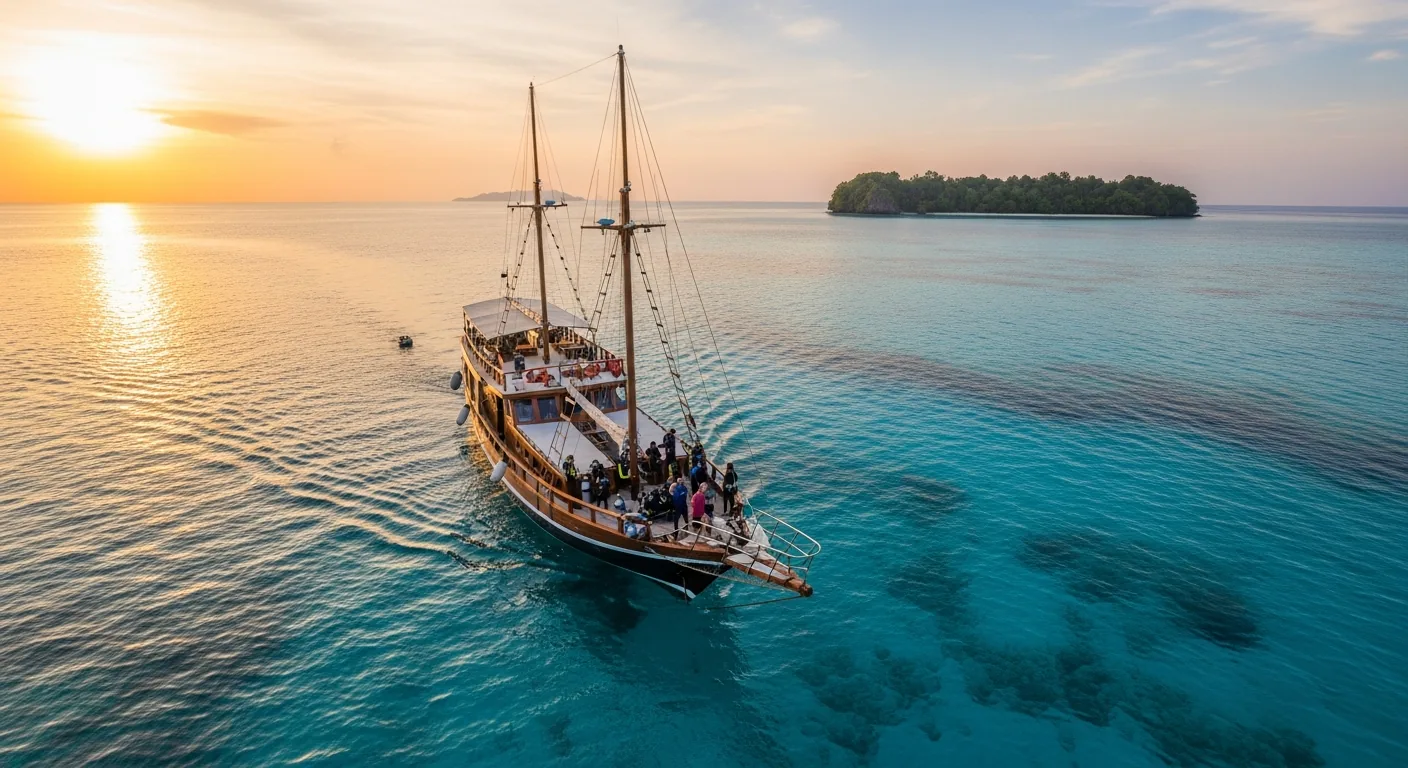
The water’s surface breaks, and the silence of the Banda Sea is replaced by the rhythmic exhalation from your regulator. Below, a school of scalloped hammerheads glides through the deep blue. This is the particular reward of an Indonesian liveaboard charter—access to marine encounters far from any shore-based operation. Yet, the Indonesian archipelago, with its 17,508 islands stretching over 5,000 kilometers, presents a complex planning challenge. Selecting the correct vessel, for the correct region, at the correct time of year is the critical variable that separates a satisfactory dive trip from a truly superlative one. The question is not simply which is the best liveaboard indonesia has to offer, but which is the precise instrument for your specific objectives.
This guide moves beyond brochure descriptions to provide a strategic analysis for discerning divers planning for 2026. We dissect the four premier liveaboard regions—Komodo, Raja Ampat, Wakatobi, and Halmahera—and align them with the seasonal monsoon cycles that dictate visibility, currents, and marine life congregations. Here, we present a curated ranking of vessels, not on luxury alone, but on their suitability for these distinct and demanding environments. See also: explore Top 10 Rankings 2026.
Decoding Indonesia’s Dive Seasons: When to Charter
Indonesia’s climate is governed by two opposing monsoons. Understanding their timing is fundamental to itinerary planning. The southeast monsoon, from roughly May to October, brings dry weather to the southern archipelago, making it the optimal season for Komodo National Park and the Lesser Sunda Islands. Conversely, the northwest monsoon, from November to April, delivers calm seas and clear skies to the northern regions, primarily Raja Ampat and West Papua. The transitional months—April, May, September, and October—are when the winds shift, creating windows for unique “crossing” voyages that can traverse vast areas like the Banda Sea or Halmahera. Booking a vessel during the wrong monsoon can result in rough surface conditions, reduced visibility often below 15 meters, and the absence of key pelagic species. For instance, attempting a Komodo trip in January often means contending with heavy rain and challenging seas. A top liveaboard indonesia operator will have their fleet positioned in the correct region months in advance, following these predictable weather patterns.
Komodo National Park: A Realm of Dragons and Currents (May – October)
Komodo, a UNESCO World Heritage site since 1991, is defined by its raw, sun-scorched landscapes and nutrient-rich, current-swept waters. The diving here is exhilarating and requires a degree of experience. The Indonesian Throughflow funnels immense volumes of water between the Flores and Savu Seas, creating conditions that attract large marine fauna. Dive sites like Batu Bolong and The Cauldron are legendary for their velocity, often requiring a negative entry and a reef hook to hold position. The reward is a density of life: giant trevally, white-tip reef sharks, and vibrant coral gardens. The primary draw during the peak season (June to September) is the congregation of reef manta rays (Mobula alfredi) at cleaning stations like Manta Point. According to veteran dive guide Ketut Suarsa, “A good guide in Komodo reads the tide charts like a map. We plan every dive to be at a site at the exact right moment—a falling tide at Castle Rock, a rising tide at Golden Passage. It’s a science.” The surface intervals are equally compelling, with treks on Rinca or Komodo Island to observe the Komodo dragon, the world’s largest lizard, which can reach lengths of 3 meters.
For this region, the best phinisi indonesia can provide is often the vessel of choice, combining stability with a classic aesthetic. Consider these two options for a 2026 Komodo charter:
- Sequoia: A 26-meter custom-built wooden yacht designed for intimate charters, accommodating a maximum of 6 guests. Its smaller size allows access to shallower, protected anchorages. A 7-night private charter starts from $65,000 USD.
- Prana by Atzaró: At 55 meters, it is one of the largest Phinisi yachts in the world. With nine suites, a yoga deck, and a crew of 18, it offers a high level of service for up to 18 guests. Per-person rates for scheduled departures begin around $1,700 USD per night.
Raja Ampat: The Epicenter of Marine Biodiversity (October – April)
Located off the northwest tip of Bird’s Head Peninsula in West Papua, Raja Ampat (“The Four Kings”) is, by scientific consensus, the global center of marine biodiversity. A 2012 survey by Dr. Gerald R. Allen documented a record-breaking 374 species of fish on a single dive at the Cape Kri site. The archipelago’s 1,500 jungle-covered islands sit in a nexus of currents from the Pacific and Indian Oceans, creating an explosion of life. The diving is characterized by immense schools of fish, pristine hard and soft coral gardens, and unique species like the walking shark and the flamboyant cuttlefish. Sites such as Melissa’s Garden and Boo Windows offer kaleidoscopic coral vistas, while Blue Magic is a seamount known for attracting oceanic manta rays and large pelagics. The optimal season, from October to April, provides glassy seas ideal for exploring the labyrinthine waterways. The sheer scale of Raja Ampat means a liveaboard is not just preferable; it is essential. A 10- or 12-night itinerary is recommended to adequately cover the core areas of Dampier Strait and Misool. Finding the right indonesia best liveaboard here depends on your priorities—be it photographic facilities or expeditionary capability.
The liveaboard indonesia ranking for Raja Ampat is competitive, with vessels built to exacting standards. Here is a direct comparison:
| Vessel | Length | Max Guests | Price / Night (per person, approx.) | Key Feature |
|---|---|---|---|---|
| Aqua Blu | 60 meters | 30 | $1,350 USD | Former British Naval Explorer; high stability, gym, and spa facilities. |
| Amandira | 52 meters | 10 | $18,000 USD (full charter) | Operated by Aman Resorts; exceptional service ratio, PADI dive center. |
Wakatobi & The Banda Sea: Exclusive Reef Frontiers
For those who have already experienced Komodo and Raja Ampat, the routes through the Banda Sea and Wakatobi represent the next frontier. Wakatobi, an acronym of the four main islands (Wangi-wangi, Kaledupa, Tomia, and Binongko), is a UNESCO Marine Biosphere Reserve covering 1.39 million hectares. It is known for its exceptionally healthy and resilient reef systems and some of the highest visibility in Indonesia, often exceeding 40 meters during the peak seasons of March-May and September-November. The diving is predominantly wall and reef-focused, with an extraordinary density of coral and invertebrate species. Further east, the Banda Sea is the realm of pelagic encounters. These “Ring of Fire” itineraries, often 11 to 14 nights long, are true expeditions. They are timed with the seasonal plankton blooms that attract schooling hammerhead sharks, particularly around the volcanic island of Gunung Api. The journey also carries significant historical weight, tracing the ancient Spice Routes for nutmeg and clove. These are not standard itineraries; they are crossings undertaken by only the most capable, long-range vessels in the fleet. A top liveaboard indonesia for this route must have significant fuel and water capacity, and an experienced crew adept at open-ocean passages.
Halmahera: The Spice Islands’ Uncharted Passage
Positioned squarely between the dive meccas of Raja Ampat and Sulawesi, Halmahera is the largest of the Maluku Islands, yet it remains remarkably unexplored by liveaboards. This is the connoisseur’s choice, a region for repeat visitors to Indonesia seeking new territory. The underwater topography is a direct reflection of its volcanic geology: dramatic pinnacles, deep walls, and black-sand critter sites. Because of its location at the confluence of major ocean currents, Halmahera exhibits a unique faunal mix, with species typical of both the Indian and Pacific Oceans. Dive sites are often newly discovered and remain unnamed. Charters here are typically transitional itineraries in April/May or September/October, as vessels reposition between Raja Ampat and Komodo. A Halmahera trip is an exploration in the truest sense. The vessel of choice must be self-sufficient. One such platform is the Rascal, a 30-meter custom Phinisi that focuses on private charters for up to 10 guests. Its itineraries are bespoke, often charting new routes based on weather and scouting reports, offering a level of exclusivity that is increasingly rare. A charter here is less about checking off a list of famous dive sites and more about the process of discovery itself.
Liveaboard Indonesia Ranking: A 2026 Vessel Comparison
Selecting a vessel requires a careful assessment of its specifications against your group’s size, budget, and diving priorities. A traditional Phinisi offers a unique cultural connection, while a modern motor yacht provides speed and stability. The table below provides a comparative overview of four leading vessels in the best liveaboard indonesia category for 2026 itineraries.
| Vessel Name | Primary Region(s) | Length (m) | Max Guests | Starting Price / Night (USD) | Distinguishing Feature |
|---|---|---|---|---|---|
| Alila Purnama | Komodo, Raja Ampat | 46 | 10 | $16,500 (full charter) | Luxury Phinisi with onboard spa therapist and PADI dive center. |
| Aqua Blu | Komodo, Raja Ampat, Banda Sea | 60 | 30 | $1,250 (per person) | Long-range expedition vessel with exceptional stability. |
| Silolona | Komodo, Raja Ampat, Banda Sea | 50 | 10 | $17,500 (full charter) | Authentic Phinisi design; known for culinary program and cultural tours. |
| The Rascal | Komodo, Raja Ampat, Halmahera | 30 | 10 | $10,500 (full charter) | Contemporary Phinisi focused on flexible, exploratory itineraries. |
Securing Your Berth: A Practical Guide to Booking
The most sought-after vessels and itineraries, especially during peak seasons, are often booked 12 to 18 months in advance. To secure your preferred dates for a 2026 charter, the process should begin now. Here are critical action items: See also: book Contact.
- Define Your Priorities: Is your focus on pelagic action, macro photography, or casual reef diving? The answer will heavily influence the ideal region and time of year.
- Consult an Expert: A specialist agent can navigate the complexities of contracts, logistics, and vessel selection, providing insights that are not available online. They can also advise on the nuances of a full private charter versus booking a cabin on a scheduled departure.
- Verify Inclusions: Confirm what is covered in the charter price. Typically this includes all meals, diving, and non-alcoholic beverages. Nitrox, park fees (which can be over $150 per person), and crew gratuity (customarily 10% of the charter fee) are often additional costs.
- Insurance is Non-Negotiable: All reputable operators will require proof of comprehensive dive accident insurance, such as that provided by Divers Alert Network (DAN), as well as trip cancellation insurance.
liveaboard indonesia ranking and seasonal calendars requires precise information. The difference between a good trip and an exceptional one lies in these details. Our role is to provide that clarity and secure the vessel that aligns perfectly with your expectations.
Related: Best Liveaboard Indonesia.