
The Best Liveaboard Indonesia: A Definitive Comparison of Komodo and Raja Ampat for 2026
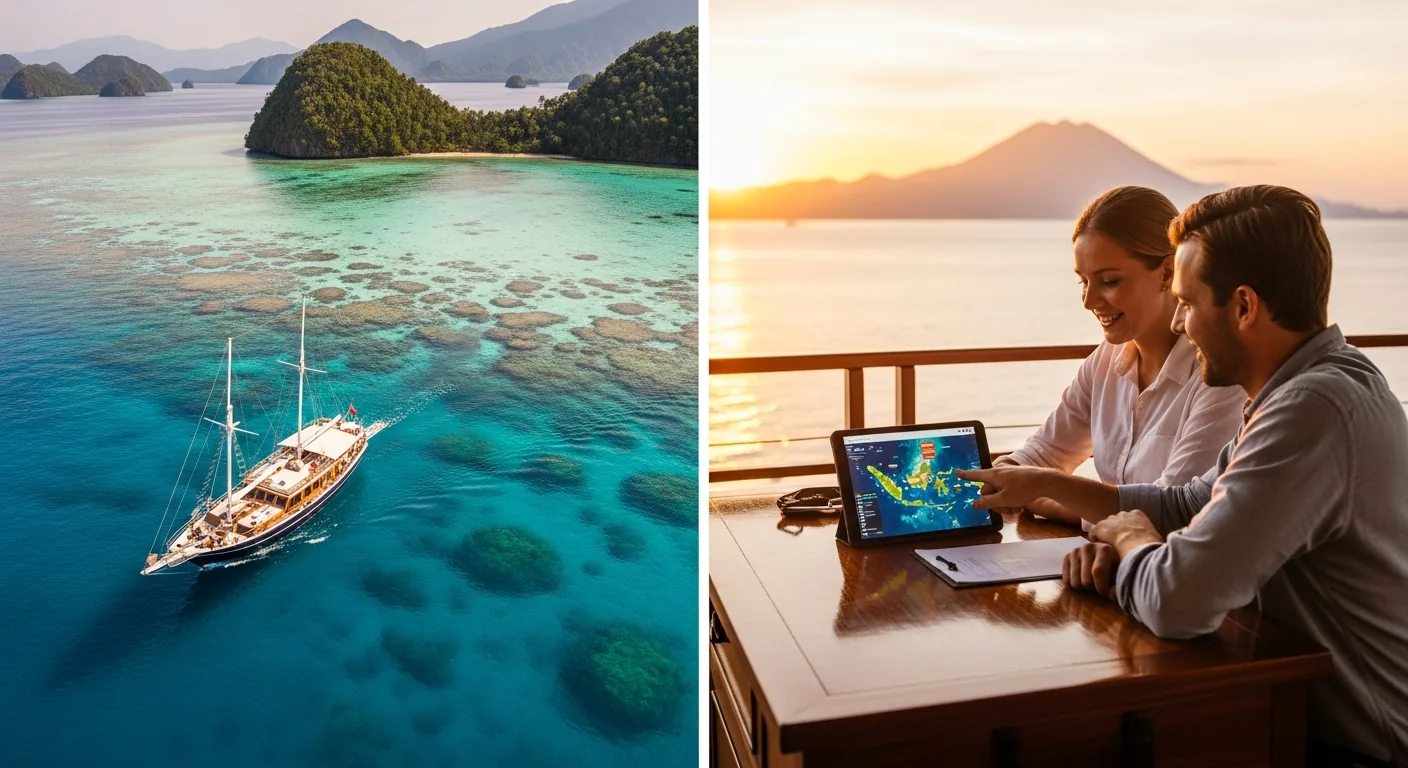
The air on the Flores Sea is thick with salt and the scent of sun-baked volcanic earth. As the phinisi’s twin masts scribe arcs against a cobalt sky, the rhythmic creak of the ironwood hull is the only sound breaking the silence. Below, the Indonesian Throughflow, a massive current moving 15 million cubic meters of water per second from the Pacific to the Indian Ocean, sculpts the underwater world. This is the preface to a Komodo dive. Hundreds of nautical miles east, in West Papua, the atmosphere is different. The air is heavy with the petrichor of recent rain on a billion leaves. The water is a placid, impossible turquoise, reflecting the jungle-draped karst pinnacles that define the horizon. This is the overture to Raja Ampat. For the discerning diver, choosing between these two archipelagos is the central question when planning a trip to Indonesia. This is not a matter of good versus better, but of aligning a region’s distinct character with your own expectations of what a premier dive expedition should be. See also: see Best Liveaboard Indonesia’s Home.
Decoding Indonesia’s Premier Dive Regions: Komodo vs. Raja Ampat
Indonesia, an archipelago of over 17,500 islands, sits at the heart of the Coral Triangle, an area harboring the highest concentration of marine biodiversity on the planet. Within this epicenter, two regions command the attention of the global diving community: Komodo National Park and the Raja Ampat archipelago. Selecting the best liveaboard Indonesia offers requires a granular understanding of their fundamental differences. Komodo, located in the Lesser Sunda Islands, is a region defined by powerful currents, dramatic volcanic topography, and encounters with pelagic megafauna. Raja Ampat, off the coast of West Papua, is a sprawling marine sanctuary celebrated for its staggering coral and fish species count and its labyrinthine, otherworldly landscapes. The decision hinges on a preference for high-adrenaline drift dives versus exceptional biodiversity immersion. A top liveaboard Indonesia ranking must weigh these distinct, world-leading experiences against each other. See also: time best liveaboard.
The Diving Experience: A Technical Breakdown
The character of a dive region is written in its currents, temperature gradients, and resident marine life. Here, Komodo and Raja Ampat present two entirely different narratives. See also: book Contact.
Komodo National Park: The diving here is dynamic, shaped by the convergence of the Indian and Pacific Oceans. The Indonesian Throughflow forces immense volumes of water through narrow channels between islands, creating some of the world’s most exhilarating drift dives. At sites like ‘The Cauldron’ or ‘Shotgun’, currents can exceed 8 knots, demanding respect and experience. Water temperatures present a significant variance; the northern sites average a warm 28°C, while nutrient-rich upwellings in the south, near Nusa Kode, can drop temperatures to a bracing 19°C. This thermocline effect fuels a vibrant ecosystem. Manta Point is a reliable cleaning station for reef mantas (Manta alfredi), while sites like Batu Bolong, a rock pinnacle teeming with life, are patrolled by whitetip reef sharks and giant trevallies. Macro enthusiasts will find a wealth of subjects, from pygmy seahorses to flamboyant cuttlefish, particularly in the calmer southern bays. Visibility generally ranges from 15 to 30 meters.
FAQ: Is Komodo diving suitable for beginners?
While some sheltered sites exist, the signature experience of Komodo is its currents. To fully appreciate the region, divers should hold an Advanced Open Water certification and have logged a minimum of 50 dives, with documented experience in drift diving. The best phinisi Indonesia charters for Komodo insist on these prerequisites for safety and enjoyment. See also: liveaboard cost guide.
Raja Ampat: If Komodo is about power, Raja Ampat is about profusion. The region holds the global record for marine biodiversity. On a single 2012 survey dive at Cape Kri, ichthyologist Dr. Gerald R. Allen identified 374 different species of fish. The area is home to over 1,600 fish species and more than 600 species of hard coral—approximately 75% of the world’s known total. Water temperatures are a consistent and comfortable 28-30°C year-round. The diving is varied: the Dampier Strait offers high-energy sites with schooling fish and mantas at ‘Manta Sandy’; the Fam Islands present striking coral gardens like ‘Melissa’s Garden’; and the southern region of Misool is a wonderland of soft corals and submerged caverns. Raja Ampat is also a sanctuary for rare species, including the endemic epaulette “walking” shark (Hemiscyllium ocellatum) and the cryptic wobbegong shark. Visibility is often exceptional, frequently exceeding 40 meters, especially during the peak season.
FAQ: What is the best month to dive in Raja Ampat?
The primary diving season runs from October to April, corresponding with the northwest monsoon, which brings drier weather and calmer seas. This period offers the most reliable conditions for crossing open seas between island groups and ensures the best possible visibility.
Topography and Landscape: Above and Below the Waterline
The aesthetic of a liveaboard trip is defined as much by the views from the sun deck as by the scenes underwater. The landscapes of Komodo and Raja Ampat are starkly different, each offering a unique sense of place.
Komodo: The islands of Komodo National Park, a UNESCO World Heritage site since 1991, are volcanic and arid. During the dry season, their hills are covered in golden-brown savanna grasses, reminiscent of the African plains. This dramatic, rugged landscape is punctuated by secluded bays with pristine beaches, including the iconic pink-sand beach, Pantai Merah, whose color comes from microscopic red foraminifera. The signature topside experience is the trek on Rinca or Komodo Island to see the Komodo dragon (Varanus komodoensis), the world’s largest lizard, a prehistoric relic that can reach 3 meters in length. Hikes to the summit of Padar Island yield panoramic views of its tri-colored bays, a defining image of modern travel.
Raja Ampat: Meaning ‘Four Kings’ in Bahasa Indonesia, Raja Ampat is an immense area of 4.6 million hectares. The landscape is dominated by hundreds of jungle-clad karst islands, limestone formations eroded by time and tide into dramatic mushroom shapes. The most famous viewpoints are at Piaynemo and the more remote Wayag, where a steep climb reveals a striking seascape of turquoise lagoons dotted with verdant islets. The experience is one of deep immersion in a primeval, untouched world. Kayaking through hidden channels, discovering ancient rock art, and visiting remote Papuan villages are integral parts of the surface interval experience, making it a more holistic expedition than Komodo.
Seasonality and Logistics: Planning Your Indonesian Liveaboard
Timing and travel are critical factors. The operational seasons for liveaboards in these two regions are opposite, a result of Indonesia’s complex weather patterns.
A significant number of the top liveaboard Indonesia vessels migrate between the two locations, following the calm seas. They typically operate in Komodo from May to October and move to Raja Ampat from November to April. This migration itself is a sought-after experience, often called a “crossing trip,” which can visit the remote and rarely dived Banda Sea.
FAQ: How long are typical liveaboard trips in these regions?
Due to the compact nature of the national park, Komodo itineraries can range from 5 to 10 nights. To adequately explore the vast expanse of Raja Ampat, which covers an area four times the size of Komodo National Park, trips are necessarily longer, typically ranging from 7 to 12 nights.
| Feature | Komodo National Park | Raja Ampat Archipelago |
|---|---|---|
| Primary Dive Season | May – October (Dry Season) | October – April (Northwest Monsoon) |
| Water Temperature | 19°C (South) to 28°C (North) | 28°C – 30°C (Consistent) |
| Average Visibility | 15 – 30 meters | 25 – 40+ meters |
| Dive Style | High-voltage drift dives, pinnacles, walls | Coral gardens, walls, muck, mangroves |
| Marine Life Highlights | Manta rays, sharks, Komodo dragons | Extreme coral/fish biodiversity, walking sharks |
| Topside Scenery | Arid, volcanic savanna, pink beaches | Lush, jungle-covered karst islands, lagoons |
| Accessibility | Fly to Labuan Bajo (LBJ) from Bali (DPS) | Fly to Sorong (SOQ) via Jakarta (CGK) or Makassar (UPG) |
A Curated Fleet: The Best Phinisi Indonesia for 2026
The vessel is more than transport; it is your base, your hotel, and your dive center for the duration of the expedition. The most authentic way to explore these waters is aboard a Phinisi, a traditional two-masted sailing ship handcrafted by the Konjo boat builders of South Sulawesi. This craft was recognized as an Intangible Cultural Heritage of Humanity by UNESCO in 2017. Our portfolio at Best Liveaboard Indonesia represents the pinnacle of this tradition, blending heritage with modern safety and comfort. Our 2026 liveaboard indonesia ranking is based on rigorous evaluation of vessel quality, crew expertise, and operational excellence.
- For Komodo’s Demands: The ‘Tiare’ – A 45-meter phinisi built in 2016, designed for stability in strong currents. Accommodates 12 guests in six spacious cabins, each with a private balcony. Features a dedicated camera room and offers Nitrox and Sidemount diving. Pricing from $650 USD per person/night.
- For Raja Ampat’s Expanse: The ‘Lamima’ – At 65 meters, this is one of the world’s largest wooden sailing yachts. It carries a crew of 20 for just 14 guests, ensuring an exceptional service ratio. Onboard amenities include two PADI instructors, a spa therapist, and multiple tenders for exploring remote corners. Pricing from $1,200 USD per person/night.
- The Ultimate Hybrid: The ‘Amandira’ – A bespoke 52-meter phinisi operated by Aman Resorts. This vessel offers five-star service in both Komodo and Raja Ampat. It features a dedicated dive master for every two cabins, ensuring personalized underwater guidance. A true representation of the best phinisi Indonesia can provide. Pricing from $1,500 USD per person/night.
FAQ: What distinguishes a standard liveaboard from a luxury one?
The primary differentiators are the crew-to-guest ratio, cabin dimensions and amenities (e.g., private balconies, en-suite bathrooms), the quality of cuisine, and onboard facilities. Luxury vessels often include services like in-cabin breakfast, laundry, and spa treatments, and maintain a higher guide-to-diver ratio for a more exclusive experience.
Liveaboard Investment: A Guide to 2026 Pricing
A liveaboard is a significant investment in a specialized experience. Costs vary based on the region’s logistics, the vessel’s level of luxury, and trip duration. It is crucial to understand what is included in the quoted price.
In Komodo, pricing for a reputable mid-range phinisi typically starts from $450-$650 USD per person, per night. For top-tier luxury vessels, this can increase to over $1,000 USD. National Park and port fees are an additional cost, usually around $200-$275 USD per person for the trip.
In Raja Ampat, costs are generally higher due to the remote location and associated logistical expenses. Mid-range options begin at $550-$800 USD per person, per night, with luxury charters starting at $1,200 USD and ascending from there. The Raja Ampat Marine Park Permit (known as KJL) is currently IDR 1,000,000 (approximately $65 USD) and is valid for 12 months.
Standard Inclusions on Your Liveaboard:
- Accommodation in a private, air-conditioned cabin with en-suite bathroom.
- All meals, snacks, coffee, tea, and soft drinks.
- A full dive program of 3-4 dives per day (conditions permitting), including tanks, weights, and belts.
- The services of a Western cruise director and expert local dive guides.
- Shore excursions, such as trekking on Rinca or visiting local villages.
Typical Exclusions:
- National Park, port, and local tourism fees.
- Full dive equipment rental (approximately $50-$75 USD per day).
- Nitrox fills for certified divers (approximately $15-$25 USD per day).
- Crew gratuities (a gratuity of 10-15% of the charter fee is customary).
- International and domestic flights, and airport transfers.
FAQ: Is travel and dive insurance required for booking?
Yes, it is mandatory. All guests aboard any vessel in our portfolio must have comprehensive travel insurance and dive accident insurance that includes coverage for medical evacuation. We recommend policies from providers like DAN (Divers Alert Network) or World Nomads.
Securing Your Berth: The Booking Process with Best Liveaboard Indonesia
At Best Liveaboard Indonesia, our selection is not a mere listing; it is a carefully vetted portfolio of the archipelago’s finest vessels. Our process is designed to be transparent and consultative, ensuring you are matched with the ideal vessel and itinerary for your 2026 expedition.
- Consultation: Contact our travel specialists to discuss your diving credentials, interests, preferred dates, and budget. This initial conversation is critical for us to understand your specific needs.
- Vessel Curation: Based on your profile, we will provide a shortlist of 2-3 of the most suitable vessels from our liveaboard indonesia ranking, complete with detailed specifications, cabin plans, and current availability.
- Confirmation: Upon your selection, we will place a complimentary 7-day hold on your chosen cabin while you finalize travel plans. To confirm the reservation, a deposit of 30% of the charter fee is required.
- Final Preparations: The final balance is due 90 days before your departure date. Our team will then provide a comprehensive pre-trip dossier, including a detailed itinerary, packing recommendations, and logistical information for a seamless transfer from the airport to your vessel.
To begin planning your Indonesian dive expedition, please contact our specialists.
Brand: Best Liveaboard Indonesia
Phone: +6281-1394-14563
Email: sales@komodoluxury.com
Office: Jalan Sunset Road No. 88, Kuta, Badung, Bali 80361, Indonesia