The 2026 Best Liveaboard Indonesia Ranking: Phinisi vs. Motoryacht
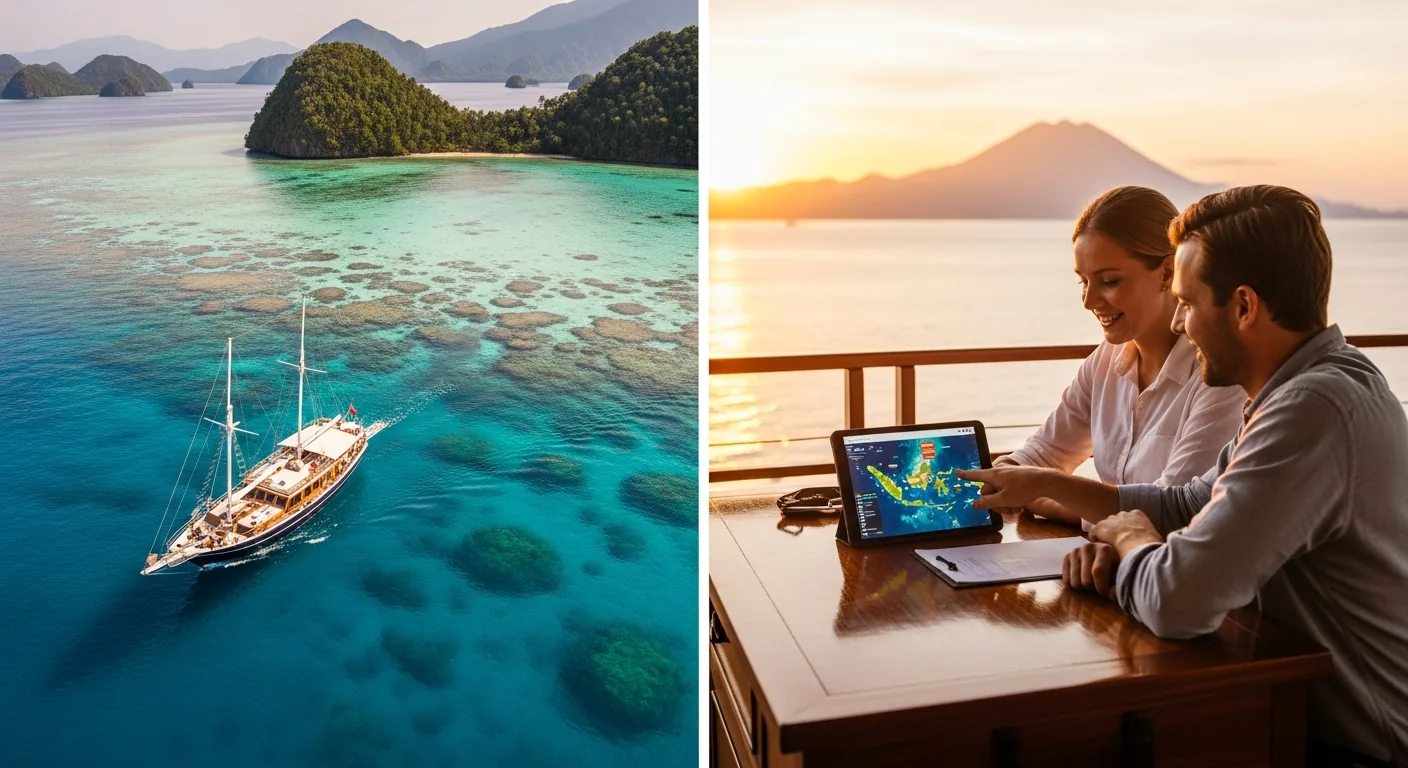
The pre-dawn air in the Dampier Strait is thick with the scent of salt and damp earth. Aboard the deck of a two-masted phinisi, the only sounds are the gentle lapping of water against the ironwood hull and the soft creak of rigging. The silhouette of Wayag’s karst spires materializes against a sky shifting from indigo to violet. This is the classic Indonesian seascape, an image deeply tied to the traditional vessels that have navigated these waters for centuries. Yet, a few nautical miles away, a steel-hulled motoryacht quietly holds its position with GPS-precision, its stabilizers ensuring a perfectly still platform for the divers preparing their equipment. The choice between these two experiences is the first, and perhaps most critical, decision for anyone planning a definitive dive expedition in Indonesia. This is not merely a choice of boat, but a choice of philosophy, pace, and perspective. As you evaluate the best liveaboard Indonesia has to offer, understanding the fundamental distinctions between a phinisi and a motoryacht is paramount to crafting a truly exceptional itinerary.
The Defining Choice: Phinisi Tradition vs. Motoryacht Precision
The Indonesian archipelago, with its 17,508 islands, presents a complex and varied marine environment. The vessel you select is your primary tool for navigating this territory. The decision informs every aspect of your trip, from the distances you can cover to the very atmosphere on board. The liveaboard Indonesia ranking is often segmented by these two vessel categories, each offering a distinct approach to exploring the Coral Triangle.
The Phinisi is a traditional Indonesian two-masted sailing ship, a design recognized by UNESCO as a Masterpiece of the Oral and Intangible Heritage of Humanity in 2017. Originally built by the Konjo people of South Sulawesi for cargo, these vessels have been masterfully repurposed into luxury dive charters. Their soul is in their craftsmanship; hulls are typically constructed from ironwood and teak, often using traditional techniques passed down through generations. A voyage on a phinisi is an immersion in maritime heritage. The pace is unhurried, dictated by wind and current as much as by a schedule. This slower tempo fosters a deep connection to the seascape, ideal for photographers and those wishing to absorb the cultural context of regions like the Banda Islands. Vessels like Lamima (65 meters) and Prana by Atzaró (55 meters) represent the zenith of this category, combining authentic construction with the amenities of a private villa.
Conversely, the motoryacht represents modern engineering and efficiency. Often built with steel or aluminum hulls, these vessels prioritize speed, stability, and space. A motoryacht like the Aqua Blu, a 60-meter former British Naval Explorer vessel, can cruise at 12 knots, nearly double the average speed of a phinisi. This capability fundamentally alters itinerary potential, making cross-archipelago voyages like a “Ring of Fire” expedition from Halmahera to the Alor Strait feasible within a 12-night schedule. Their wider beams and multi-deck structures often allow for larger cabins, dedicated camera rooms, and advanced stabilization systems (both at-rest and underway), a significant consideration for guests sensitive to motion. The experience is one of precision, comfort, and maximizing the range of exploration. Choosing the top liveaboard Indonesia offers is about aligning your personal travel style with the vessel’s inherent character.
Vessel Anatomy: A Comparative Analysis for the Discerning Diver
Beyond the romance of sail or the allure of speed, the physical characteristics of each vessel type directly impact the dive experience. Cabin dimensions, deck space, and dive platform design are critical factors. Below is a direct comparison of features to consider when reviewing the best phinisi Indonesia fleet against their motoryacht counterparts.
| Feature | Traditional Phinisi (e.g., Silolona, Dunia Baru) | Modern Motoryacht (e.g., The Rascal, Aqua Blu) |
|---|---|---|
| Hull Material | Primarily Ironwood (Kayu Ulin) and Teak. | Steel or Aluminum. |
| Average Speed | 6-9 knots. Engine-powered, with sails often for stability and aesthetic. | 10-15 knots. Allows for greater distances between dive regions. |
| Stability | Generally stable due to deep keel and heavy build. Can exhibit more rolling motion. | Often equipped with active fin or gyroscopic stabilization systems for superior comfort. |
| Atmosphere | Evokes maritime heritage, romantic, intimate. Expansive open-air deck spaces. | Contemporary luxury, spacious interiors, often climate-controlled common areas. |
| Cabin Size | Varies significantly. Can be smaller due to hull shape. Suites on top-tier vessels are 30-50 sq meters. | Typically larger, with more uniform cabin sizes and often larger ensuite bathrooms. |
| Dive Operations | Dive operations are exclusively from dedicated tenders (RIBs). | May feature a large, low-to-the-water dive deck in addition to tenders. |
| Ideal Itinerary | Deep exploration of a single region (e.g., Central Raja Ampat, Komodo National Park). | Transitional or “crossing” voyages (e.g., Flores to Ambon), covering vast areas. |
The Financial Equation: Deconstructing Liveaboard Pricing in Indonesia
Pricing for a premium Indonesian liveaboard is a function of vessel quality, seasonality, itinerary length, and service level. Rates are almost always quoted per person on a nightly basis. A charter in Komodo during the peak season (July-August) will command a higher price than a shoulder-season trip in May. Similarly, a 12-night expedition to the remote Triton Bay will be priced higher than a standard 7-night Komodo circuit. See also: raja ampat liveaboard.
For the 2026 season, expect the following price brackets for top-tier vessels:
- Boutique Phinisis & Motoryachts: These vessels, typically accommodating 8-14 guests, range from $750 to $1,100 USD per person, per night. This category includes well-regarded yachts known for excellent service and experienced dive guides.
- Ultra-Luxury Phinisis & Expedition Yachts: This echelon, featuring vessels like Lamima, Aqua Blu, and Prana by Atzaró, represents the pinnacle of the market. Expect rates from $1,300 to over $2,500 USD per person, per night. These rates reflect near 1:1 crew-to-guest ratios, onboard spa therapists, and menus crafted by executive chefs.
- Full Private Charter: Chartering an entire vessel is the ultimate expression of exclusivity. A full charter of a 6-cabin luxury phinisi for a 10-night trip in Raja Ampat can range from $90,000 to $150,000 USD. The 11-cabin expedition yacht Amandira, operated by Aman Resorts, commands charter rates starting around $19,000 USD per night.
These prices are indicative and serve as a baseline for planning. Always verify what is included and excluded, as park and port fees can add a significant amount to the final invoice. See also: see Best Liveaboard Indonesia’s Home.
Itinerary Logistics: How Vessel Type Influences Your Indonesian Route
The choice between phinisi and motoryacht directly impacts the logistical feasibility of your desired itinerary. A motoryacht’s speed advantage is most pronounced on longer “crossing” voyages. For example, traversing the 600 nautical miles of the Banda Sea to witness the schooling hammerheads around the Spice Islands is far more comfortable and efficient on a motoryacht. It can reduce open-water passage times by 30-40%, allowing for more time at key dive sites. See also: Contact.
A phinisi, by contrast, excels at immersive, regional exploration. Its slower pace is perfectly suited to the geography of Raja Ampat or Komodo, where premier dive sites are often clustered within relatively short distances. The experience becomes less about transit and more about presence. Waking up in a secluded bay, accessible only after a slow overnight motor, is a key part of the phinisi appeal. Consider this sample 8-Day/7-Night Komodo itinerary to understand the practical differences. See also: Top 10 Rankings 2026 guide.
| Day | Phinisi Itinerary Focus | Motoryacht Itinerary Focus |
|---|---|---|
| Day 1-2 | Labuan Bajo embarkation. Central Komodo: Sebayor Kecil, Tatawa Besar. Focus on vibrant reefs. | Labuan Bajo embarkation. Direct transit to North Komodo: Castle Rock, Crystal Rock for pelagic action. |
| Day 3-4 | North Komodo: Gili Lawa Laut. Dives at The Cauldron. Afternoon trek on Padar Island. | Transit to South Komodo. Dives at Manta Alley. Explore cooler, nutrient-rich waters. Water temps can drop to 22°C. |
| Day 5-6 | Move south to Rinca and Padar. Manta Point dive. Komodo dragon trek on Rinca Island. | Explore remote southern sites like Cannibal Rock. Return north, stopping at Padar for sunset trek. |
| Day 7-8 | Final dives in Central Komodo before returning to Labuan Bajo for disembarkation. | Final dives near Wainilu, known for macro life, before a swift return to Labuan Bajo. |
Charter Inclusions and Exclusions: A Standardized Overview
When evaluating any option on a liveaboard indonesia ranking, it is critical to understand the charter’s inclusions. While packages vary, the industry standard for premium vessels is largely consistent. A clear understanding prevents unexpected costs upon final settlement.
Standard Inclusions on most top-tier liveaboards:
- Accommodation in selected cabin category.
- All meals, snacks, soft drinks, and local beer. Some high-end vessels include house wines.
- A full dive program, typically 3-4 guided dives per day, including tanks, weights, and belts.
- Services of a Western cruise director and local Indonesian dive guides (ratio of 4-5 divers per guide).
- Land excursions, such as treks to see Komodo dragons or panoramic viewpoints.
Common Exclusions:
- International and domestic flights.
- National Park, Port, and local area fees. For example, combined Komodo and Raja Ampat fees for a 10-day trip can exceed $350 USD per person and are subject to change by local authorities.
- Dive equipment rental (BCD, regulator, wetsuit), typically priced at $50-75 USD per day for a full set.
- Nitrox fills. While complimentary on some luxury vessels, many charge $10-20 USD per fill or around $150 USD for the entire trip.
- Crew gratuities, with the industry recommendation being 10-15% of the charter price.
Navigating Your Selection: Frequently Asked Questions
Choosing the right vessel involves specific, practical questions. Here are answers to some of the most common queries we receive from discerning divers.
Is a phinisi stable in rough seas?
A well-designed phinisi is a seaworthy vessel, and its heavy ironwood construction provides considerable stability. However, they can be more prone to a rolling motion than a modern motoryacht equipped with active stabilization. For passages known for challenging conditions, like the Banda Sea crossing in September, a stabilized motoryacht offers a clear comfort advantage.
Which vessel type is better for non-divers?
Both can be excellent, but the choice depends on the non-diver’s interests. Phinisis, with their expansive, open decks, are superb for relaxing, sunbathing, and enjoying the scenery. Motoryachts may offer more interior lounge space, media rooms, and sometimes gyms or jacuzzis. Both offer activities like kayaking, paddleboarding, and snorkeling.
Do motoryachts have a better dive setup?
Not necessarily better, but different. Many motoryachts feature a large, fixed dive platform at the stern, which some divers find more convenient for gearing up. Phinisis operate exclusively via tenders (zodiacs or RIBs), which offer greater flexibility to drop divers precisely on a dive site’s entry point, which is crucial in currents like those found at Castle Rock in Komodo.
Is there a difference in service quality between vessel types?
No. Service quality is determined by the operator and crew, not the vessel type. Indonesia is renowned for its warm hospitality. On the top liveaboard Indonesia charters, whether phinisi or motoryacht, you can expect exceptionally high standards of service, often with crew-to-guest ratios exceeding 1:1.
Which is more environmentally friendly?
This is a complex question. Phinisis are built from wood, a renewable resource, but their engines are their primary power source. The sails are rarely used for propulsion. Modern motoryachts may have more fuel-efficient Tier III compliant engines and advanced waste treatment systems. The most critical factor is the operator’s commitment to sustainable practices, such as reef-safe anchoring, responsible waste disposal, and support for local conservation initiatives like the Raja Ampat Sea Centre.
Our Curation Process: Vetting the Best Liveaboard Indonesia Fleet
At Best Liveaboard Indonesia, our ranking is not arbitrary. Each vessel we recommend undergoes a rigorous vetting process based on a weighted scorecard. We believe that true luxury is a synthesis of safety, service, and an impeccable dive operation. Our criteria include annual safety audits (including SOLAS compliance where applicable), crew tenure and qualifications (all our recommended vessels have PADI Instructors or Course Directors as cruise directors), and independent assessments of the culinary program. We verify crew-to-guest ratios, the quality of dive tenders, and the provision of safety equipment like personal locator beacons for every diver. This meticulous process ensures that any vessel, phinisi or motoryacht, listed in our liveaboard Indonesia ranking for 2026 meets the highest operational standards.
Securing Your Berth: The Booking Protocol
Booking a premier liveaboard requires careful planning, often 12 to 18 months in advance for popular dates. Our process is designed to be transparent and seamless.
- Initial Consultation: Contact our Bali-based specialists via email at sales@komodoluxury.com or by phone at +6281-1394-14563. We will discuss your dive experience, desired destinations (Komodo, Raja Ampat, Wakatobi, Halmahera), travel dates, and vessel preference.
- Curated Proposal: We will present a curated selection of 2-3 vessels that align with your criteria, complete with detailed specifications, recent guest reviews, and a transparent price quotation.
- Holding an Option: Once you have selected a vessel, we can typically place a complimentary, no-obligation hold on your chosen dates for 7-14 days, allowing you time to coordinate flights and travel companions.
- Confirmation & Deposit: To confirm your booking, a deposit is required, typically 30% of the charter fee, payable by bank transfer. A contract will be issued detailing all terms and conditions.
- Final Payment & Pre-Trip Preparation: The final balance is usually due 90 days prior to departure. Our team will then assist with all pre-trip logistics, including dietary requirement forms, equipment rental requests, and domestic travel arrangements. You can visit our office at Jalan Sunset Road No. 88, Kuta, Badung, Bali 80361 for an in-person consultation.
Further Exploration: Regional Deep Dives
While this guide provides a framework for choosing your vessel, the true magic lies in the destinations themselves. Each region offers a profoundly different experience. A phinisi in Komodo offers encounters with prehistoric dragons and thrilling drift dives. A motoryacht expedition through the Banda Sea is a journey through history and pelagic corridors. We encourage you to explore our detailed guides on Raja Ampat’s exceptional biodiversity, Wakatobi’s pristine reef systems, and the remote, exploratory diving of Halmahera to complete your understanding of what the best liveaboard Indonesia experience can be.