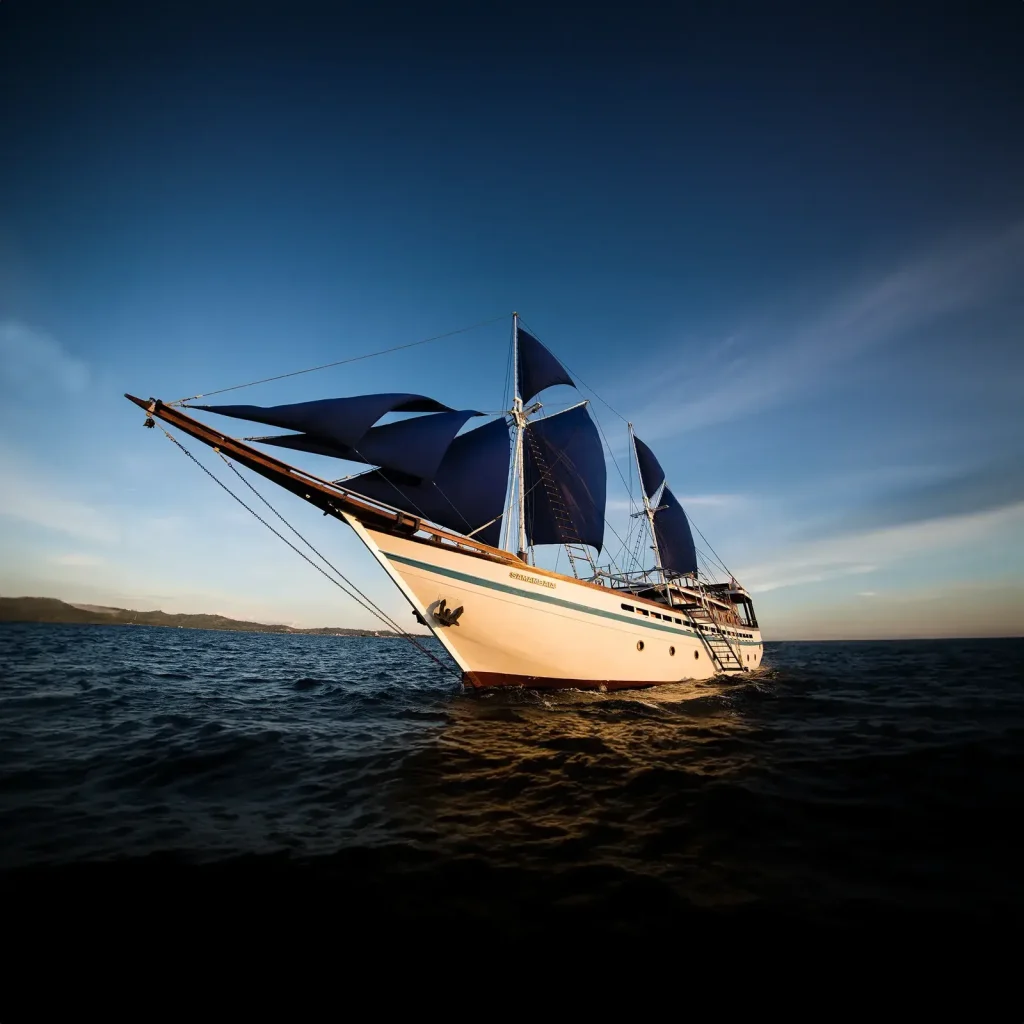
The best Wakatobi liveaboard options in our Komodo Luxury network desk are a short list of 8–10 vessels that regularly sail Southeast Sulawesi March–December, with comfort-focused cabins, strong safety records and high guide ratios. As of August 2026, good Wakatobi itineraries typically cost around USD 300–700 per person per night depending on class.
Which is the best Wakatobi liveaboard for comfort and privacy?
For “best wakatobi liveaboard” our desk prioritises quiet vessels with fewer guests, ensuite cabins and strong noise insulation. Across 240+ boats handled since 2015, the most consistent guest satisfaction in Wakatobi comes from Deluxe and VIP class motor yacht liveaboard Indonesia vessels carrying 8–16 guests with at least 1:2 crew-to-guest ratios.
These boats typically offer queen or king beds, air-conditioning with individual controls, and private bathrooms with hot water. On many Wakatobi departures, couples can secure stern or upper-deck cabins away from the compressor area, creating a quiet liveaboard Indonesia for couples wanting privacy without needing a full private charter.
Compared with simple wooden phinisi running busier routes, Wakatobi-focused ships often have wider dive decks and camera tables, because the area attracts macro photographers and mixed-experience groups. Our Indonesia liveaboard recommendations in this region therefore lean toward vessels that separate camera-rinsing from gear rinsing and include at least one dedicated lounge where non-divers can relax away from the briefings.
Wakatobi liveaboard vs resort: which gives better access to diving?
The core trade-off in the Wakatobi liveaboard vs resort debate is range. Land-based resorts (including famous house-reef operators in Southeast Sulawesi) repeatedly dive a compact radius around their pier. A liveaboard, by contrast, can cover far-flung atolls and walls in the Tukang Besi archipelago across a 7–10 night loop.
Because Wakatobi is accessible March–December, boats can schedule south–north circuits to follow seasonal currents, adding pelagic points in early season and more sheltered bays later. For guests comparing liveaboard Indonesia vs resort more broadly, Wakatobi is one of the clearest examples where a boat unlocks offshore seamounts and transitional reefs that day-boats rarely reach.
However, travellers seeking spa facilities or long, dry afternoons may still prefer a resort. Our team often steers photographers and ambitious divers toward liveaboard vs resort Raja Ampat or Wakatobi, while snorkellers and families sometimes do a split stay, using a resort plus a shorter liveaboard to maximise both comfort and site variety.
How does Wakatobi compare with Komodo, Raja Ampat and other Indonesia routes?
Planning across Indonesia usually starts with the best liveaboard routes Indonesia by month. Wakatobi runs March–December, Komodo April–November, Raja Ampat October–April, Banda Sea roughly September–November and March–April, Alor August–November, and Cenderawasih Bay June–October. Many boats rotate between these, with Wakatobi often paired with Alor or Flores crossings.
For someone wondering about liveaboard vs cruise Indonesia experiences, Wakatobi tends to feel more “dive expedition” than “cruise ship”. Seas are generally calmer than Banda crossings yet offer more consistent visibility than some Komodo monsoon months. Macro lovers often combine Wakatobi with a black sand macro diving liveaboard Indonesia leg around Alor or north Sulawesi.
Travellers researching liveaboard vs resort Raja Ampat often end up designing an east–Indonesia circuit that layers three styles: resort in Bali, a best liveaboard for Bali Gili Komodo combo leg, then a dedicated Wakatobi or Raja Ampat liveaboard. Our desk can map routes around monsoon patterns as of August 2026 so guests avoid rougher seas where possible.
What does a Wakatobi liveaboard cost and how does it compare to Komodo or Raja Ampat?
As of August 2026, Wakatobi departures on midrange boats usually sit around USD 250–450 per person per night, with VIP options from roughly USD 600–900 per night. Ultra-high-end VVIP charters in Indonesia can exceed USD 18,000 per night for the entire vessel, though these often operate across multiple regions, not Wakatobi only.
For context, how much does a Komodo liveaboard cost on shared open trips? Typical 3D2N Komodo itineraries start from around USD 220 per person for basic shared cabins, midrange Komodo at USD 250–450 per night, and luxury phinisi or motor yachts often at USD 600–1,200 per night. A Raja Ampat liveaboard 10 days price commonly ranges from USD 3,500–9,000 per person depending on cabin and operator.
Prices differ because Wakatobi fuel logistics and provisioning from Southeast Sulawesi can be more complex than Bali–Flores, but park fees are generally lower than Komodo’s foreign diver charges, which cluster around IDR 300,000 per diver per day in 2026. Always confirm in writing whether park and harbour fees are included in the advertised rate.
Is rainy season bad for liveaboard Indonesia, and when should you sail Wakatobi?
Many guests ask: is rainy season bad for liveaboard Indonesia trips? The answer depends heavily on region. Wakatobi’s main season is March–December, but April–June and September–November commonly align lighter winds with good visibility. Short rain showers do not usually affect diving, but strong monsoon winds in January–February often pause operations.
Comparatively, liveaboard komodo may vs september highlights this nuance. May can bring lush green islands and fewer boats, but seas in the wider Flores Sea may still carry some residual swell. September is drier and busier, with cooler water and good current-driven action. Our desk looks at each region’s transitional months then matches them with guest tolerance for swell, rain and cooler temperatures.
Indonesia liveaboard vs resort planning must respect these seasonal shifts. Resort guests might be fine skipping a day of diving during a storm, while a liveaboard crossing Banda or Cenderawasih during the wrong month could lose key pelagic sites. For the most weather-sensitive travellers, Wakatobi shoulder months are often recommended for balance between calm seas and availability.
How does Wakatobi fit into a longer Indonesia liveaboard itinerary?
Wakatobi often acts as a “second chapter” in a broader journey covering several regions. Divers might start with Bali macro and Gili reefs, then move onto the best liveaboard for Bali Gili Komodo combo to chase mantas and dragons, before finishing in Wakatobi for colourful walls and easier conditions. Another popular pattern pairs Wakatobi with Raja Ampat or Cenderawasih whale shark trips.
Getting around Indonesia is usually by domestic flights. For Raja, the standard guidance on how to get to Raja Ampat from Jakarta is to fly Jakarta–Sorong, then continue by fast boat to Waisai or board the liveaboard directly in Sorong harbour. From Sorong, some vessels reposition to Wakatobi via Banda or Ambon during September–November or March–April windows.
Those exploring niche routes such as the best cenderawasih liveaboard will often combine them with Wakatobi or Alor to experience very different reef types and pelagic behaviour. Our team also directs families toward itineraries highlighted in our best family liveaboard indonesia editorial, then layers more advanced crossings once younger divers gain experience.
- Typical Wakatobi itineraries: 7–10 nights, March–December, with 3–4 dives per day including night dives.
- Average guest load on recommended vessels: around 8–16 divers, often with 2–3 dive guides (as of August 2026).
- Standard inclusions: cabin, meals, diving, tanks and weights; exclusions often include park fees and alcohol.
- Typical domestic access: flights via Makassar or Bali to Southeast Sulawesi gateways, then speedboat or tender.
- Recommended lead time: 9–12 months for peak dates; 6 months still workable for shoulder-season cabins.
- Komodo park fee benchmark: around IDR 300,000 per foreign diver per day for core entry, diver and harbour charges.
- Shared Komodo open-trip example: 3D2N from approximately USD 220 per person (as of August 2026).
Frequently asked questions
Which is the best wakatobi liveaboard?
There is no single “best” boat for everyone. Our desk highlights Wakatobi vessels with ensuite cabins, a crew-to-guest ratio around 1:2, strong safety records and flexible itineraries March–December. Quiet, 8–16 guest motor or phinisi yachts usually deliver the best balance of comfort, privacy and dive quality across Southeast Sulawesi.
What criteria matter most?
The key criteria are safety record (maintenance and briefings), cabin comfort (beds, AC, bathrooms), crew ratio and guiding quality, itinerary design for the season, and overall value. We also review scuba liveaboard reviews Indonesia-wide and match guest profiles: photographers, beginners, families or couples seeking privacy on smaller-capacity yachts.
How much does it cost?
As of August 2026, Wakatobi liveaboards generally range from about USD 250–450 per person per night for midrange boats and USD 600–900+ per night for VIP options. Very high-end private charters across Indonesia can exceed USD 18,000 per night. Always check what is included: nitrox, park fees, transfers and rental gear policies vary.
When should you book?
For Wakatobi’s March–December season, securing your preferred cabin usually requires booking 9–12 months ahead, especially for school holidays and October–November. Shoulder dates may still be available 4–6 months out. Crossings that combine Wakatobi with Banda, Raja Ampat or Cenderawasih tend to sell faster due to limited annual departures.
Open trip or private charter?
Shared “open trip” cabins are ideal for solo travellers or pairs watching budget, while private charter offers full control of itinerary and maximum privacy. Our guide to open trip vs private charter compares costs and pros in detail. For couples or families, a small-group charter on a 4–6 cabin boat can be the best liveaboard Indonesia for the money.
For tailored advice on Wakatobi or a wider Indonesia route plan, contact the Komodo Luxury desk via WhatsApp 628113823875 or email sales@komodoluxury.com and request current options, including any pairing with our best cenderawasih liveaboard selections.
Last updated 7 August 2026