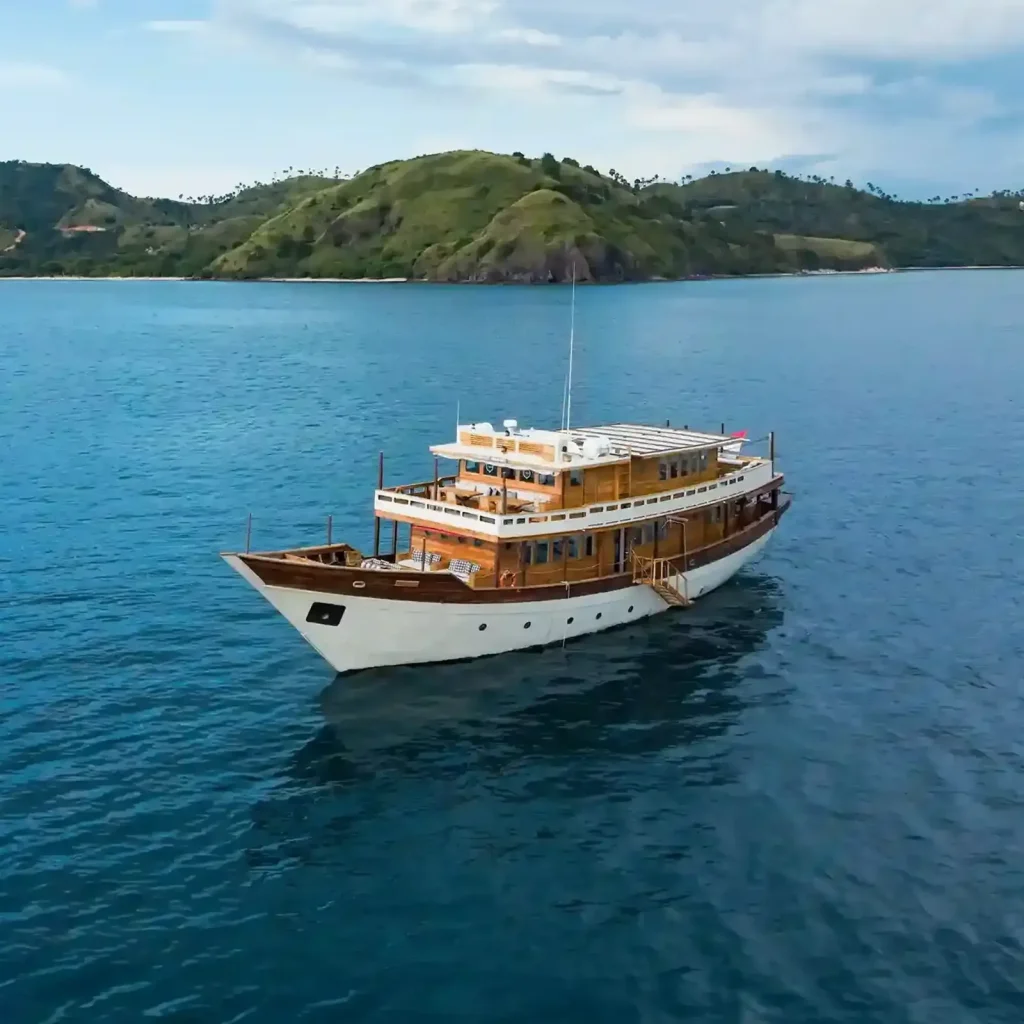
For Banda Sea vs Komodo diving, the clean split is this: Banda Sea for blue-water pelagic encounters and hammerhead schools (September–November), Komodo for high-energy reefs, mantas and dragons (April–November). Most Indonesia liveaboard diving fans end up doing both on separate trips because the main seasons barely overlap.
What is the real diving difference between Banda Sea and Komodo?
The core difference is pelagic blue-water versus current-swept reef. In the Banda Sea, classic hammerhead sites around the “Forgotten Islands” and Banda Arc are typically dived September–November, sometimes March–April, with encounters often in the 25–40 m range. These remote walls and seamounts favour advanced divers comfortable with open-ocean descents.
Komodo liveaboard diving is about variety packed into a smaller area: manta cleaning stations at Karang Makassar, fishy current dives at Batu Bolong and Castle Rock, and macro in warm bays like Wainilu. The official Komodo season runs roughly April–November, with peak visibility and mantas often July–September.
For photographers, Banda Sea leans toward wide-angle: schooling hammerheads and dramatic drop-offs. Komodo delivers both wide-angle and macro on the same Indonesia diving cruise. As of August 2026, many boats in our network (including Mermaid 2, Fenides, and Neptune One) schedule Banda crossings specifically to target hammerhead aggregations, then shift to Komodo for mixed-ability trips.
Which destination matches your skill level and comfort with current?
Skill requirement is the main deciding factor in Banda Sea vs Komodo diving. Banda itineraries commonly recommend Advanced Open Water plus 50+ logged dives and solid buoyancy at depth. Blue-water hammerhead dives often involve negative entries in mild to moderate current, with little or no visual reference, so comfort in the blue is essential.
Komodo has a broader spread. North and central Komodo feature drifts and occasional “roller-coaster” currents, yet there are also sheltered bays and training-friendly sites. Many of the best Komodo diving liveaboard routes are accessible for confident Open Water divers with 20–30 dives, provided they listen carefully to briefings and skip the very toughest sites when advised.
Liveaboard vs land based diving Komodo also matters: resort-based operators can cherry-pick calm sites each day, while liveaboards commit to multi-day routes that may include more exposed pinnacles. As of August 2026, our desk usually recommends Banda Sea to divers already happy in Raja Ampat-style currents or those who have done Komodo once and want “next-level” blue-water.
How do seasons, logistics and trip length differ between the two?
Seasons rarely overlap fully, which is excellent news if the plan is to dive both. Komodo’s core liveaboard window is April–November, with many boats reducing operations in the wet months. Banda Sea crossings are most common September–November and again March–April, as boats move between Komodo and Raja Ampat.
Access is also different. Komodo trips usually depart from Labuan Bajo (LBJ), reached by a 1 hour 10 to 1 hour 30 minute flight from Bali (DPS). Banda itineraries tend to start/finish in Ambon, Saumlaki or Maumere, using domestic flights routed via Jakarta or other hubs. Travel days for Banda often run longer, with more connections.
Typical Komodo itineraries are 3D2N shared trips up to 7–8 nights. As of August 2026, shared 3D2N open trips start around USD 220 per person, with midrange liveaboards in the USD 250–450 per night range. Banda Sea itineraries are usually 7–12 nights because of the remote distances, so total trip time and budget must be higher, even if per-night pricing is similar.
How do prices and comfort levels compare on Indonesia liveaboards here?
For liveaboard diving Indonesia, price tiers are broadly similar across both destinations; what changes is route length and positioning logistics. As of August 2026, midrange cabins often run USD 250–450 per night in both areas; more luxurious Deluxe/VIP/VVIP yachts like Celestia, Prana, or Lamima can reach USD 600–1,200 per night, with top VVIP charters sometimes exceeding USD 18,000 per night.
Remote Banda Sea crossings can incur repositioning surcharges or one-way routing between ports. Komodo pricing is helped by competition and easier access, so per-dive cost there usually ends up lower. For comfort and inclusions, our team groups boats into classes; see this breakdown of deluxe vs vip vs vvip to understand what cabin size, crew ratio and amenities you actually get.
For travelers seeking the best liveaboard Indonesia for diving all inclusive, Komodo has more options with bundled park fees and domestic transfers. Banda packages are often more “a la carte”: park fees and some flights remain separate, but the payoff is smaller group sizes and exploratory routes.
How does each compare against Bali and Raja Ampat alternatives?
Many divers weigh Komodo liveaboard vs Bali diving first. Bali has superb land-based macro and some strong current sites, yet large-boat Bali liveaboard operations remain fewer. Is Bali liveaboard diving good? Yes for certain niche routes, but for a classic Indonesia liveaboard vs land based diving decision, Komodo and Raja Ampat still dominate.
Against Raja, the Komodo vs Raja Ampat diving question often comes down to coral density and fish biomass (Raja) versus varied topography, mantas and dragons (Komodo). Banda Sea then sits as a pelagic “third pillar” of indonesia liveaboard diving, focused on blue-water and hammerheads rather than dense reef scenery.
Travelers focused on the best liveaboard for macro diving Indonesia may lean toward north Sulawesi or specific Alor/Komodo itineraries instead of Banda, which is primarily wide-angle. For a wider Indonesia diving cruise strategy, many repeat guests spend one year on Komodo, the next on Raja Ampat, then a Banda Sea crossing as the “expedition” trip.
What kind of boats and inclusions should you expect in each region?
Across both regions, the same core fleet types circulate: traditional phinisi yachts (like Manta Mae, Silolona, Dunia Baru), steel-hulled cruisers (Mermaid 2, Solitude Adventurer), and smaller boutique vessels such as Berdikari or Catnazse. The Komodo Luxury network has handled over 240 vessels across Indonesia since 2015 as part of Juara Holding Group, giving our desk a broad reference base.
On-board, most scuba diving liveaboard Indonesia itineraries offer 3–4 dives per day including night dives, with nitrox available on many midrange and luxury boats. The best liveaboard for scuba diving Indonesia for your needs depends on balance: cabin comfort, crew ratio, itinerary quality, safety track record, and value. Park fees in Komodo (roughly IDR 300,000 per foreign diver per day in 2026) may or may not be included, so always confirm.
For assurance on the safety side, our editorial picks only list boats with transparent standards and recent audits; readers concerned about is liveaboard indonesia safe questions can review updated safety notes before committing to any Indonesia cruise for scuba diving.
- Typical Komodo park fees for foreign divers around IDR 300,000 per diver per day as of August 2026 (entry, diver surcharge, harbour).
- Komodo shared 3D2N open trips from approximately USD 220 per person as of August 2026.
- Midrange Indonesia liveaboards roughly USD 250–450 per person per night as of August 2026.
- Luxury/VVIP charters in Komodo and Banda from about USD 600–1,200 per night, with some VVIP yachts exceeding USD 18,000 per night as of August 2026.
- Core Komodo liveaboard season: April–November; Banda Sea crossings: mainly September–November plus some March–April departures.
- Typical daily schedule: 3 day dives + 1 night dive, depending on conditions and transit legs.
- Most Indonesia yachts include tanks, weights, guide services, meals and soft drinks, with alcohol, gear rental and tips usually extra.
Frequently asked questions
Banda Sea Vs Komodo Diving?
Banda Sea prioritises blue-water pelagic encounters and hammerhead schools, usually September–November, suited to experienced divers. Komodo offers a mix of mantas, reefs, macro and the chance to see Komodo dragons April–November. Komodo is easier to reach and more budget-flexible; Banda is more remote, longer and more expedition-style.
Which is better for beginners?
Komodo is generally friendlier for improving divers. With careful choice of operator and route, beginners can focus on the calmer central and southern bays, skipping the strongest currents. Banda Sea itineraries often require Advanced certification and experience in blue-water descents, so they are rarely recommended for fresh beginners.
Which costs more?
Per night, prices can be similar, but Banda Sea usually costs more overall. Banda routes are longer (7–12 nights) and involve remote ports and extra domestic flights. Komodo offers 3–4 night tasters and many midrange options, so total trip budgets are more manageable, even if you choose a higher-comfort cabin class.
Can you combine both?
Yes, but usually not in a single short itinerary. Some longer repositioning cruises link Komodo, Alor and Banda during September–November or March–April. Most travelers instead plan separate trips in different months so they can pick the best indonesia liveaboard diving season for each region without rushing long crossings.
What do most travelers choose?
Most first-time visitors start with komodo liveaboard diving because access via Bali is easy and trip lengths are flexible. After that, many explore Raja Ampat, then consider Banda as a “third chapter.” For choosing specific boats, our komodo liveaboard ranking 2027 page highlights editorial picks by comfort level and route style.
To match you with the best liveaboard Indonesia for diving or discuss the best Indonesia yacht cruise for diving that fits your dates and skill, contact the Komodo Luxury desk via WhatsApp 628113823875 or email sales@komodoluxury.com. For detailed cabin class comparisons and a direct enquiry form, visit our deluxe vs vip vs vvip liveaboard overview.
Last updated 7 August 2026